
3 Outdated Injury Myths Ruining Your Recovery (And What to Do Instead)

Updated: Oct 5

Yes, my favorite...old school injury advice. If you’ve been told to slap an ice pack on every ache, rest until you're 100% pain-free, or get an MRI before you even think about starting rehab, you are following sports medicine advice that is at least twenty years out of date. Yea, that old.
Seriously. Active adults and athletes are constantly treated like fragile machines that just break down under load. Today, we are dismantling that mindset. Your body isn't a car with parts that simply wear out over time. Can we please stop with the humans = cars analogy? We are adaptable biological organisms that thrives under intelligent, progressive load. Whether you're lifting at a local Naperville gym, doing all the fun HYROX stuff, training for a half marathon along the Riverwalk, or just trying to stay active without your knee screaming at you, holding onto obsolete habits will only delay your return to what you love.
Here are the top 3 outdated injury myths holding you back and the modern, evidence-backed upgrades we use daily at Art of PT.
(3 Outdated Injury Myths) Myth Number 1: "Ice Everything to Stop Inflammation"

For decades, the reflexive response to any strain, sprain, or tweak was ice, ice, and more ice. Wrong, wrong, wrong. We were taught to treat inflammation like a biological error that needed to be frozen out immediately. Even Dr. Gabe Mirkin, the physician who coined the famous "RICE" protocol back in 1978, officially retracted his recommendation because the research caught up: ice actually delays cellular healing. Inflammation is not a mistake. It is the essential first phase of tissue repair. When you ice an acute injury, you constrict local blood vessels and prevent macrophages (the clean-up crew of your immune system) from releasing IGF-1, a key growth factor required to rebuild damaged tissue.
Instead of old-school RICE, modern sports medicine has shifted to PEACE & LOVE:
Protect (initially avoid movements that cause severe pain)
Elevate
Avoid anti-inflammatories (NSAIDs can disrupt early collagen synthesis)
Compression
Education (trust your body's innate healing capacity)
Followed quickly by LOVE: Load, Optimism, Vascularization, and Exercise. Ditch the bag of frozen peas. Instead, use active movement or muscle pumping. KEYWORD BEING ACTIVE. Lightweight, pain-free, non-threatening movement acts as a natural pump for your lymphatic system to clear out excess fluid and desensitize nerve endings without freezing off your blood supply. When you move, your muscles contract and pump fluid through, and that's much better than freezing the inflammation. Let's keep busting myths....
Myth Number 2: "Rest and Wait Until the Pain is Completely Gone"

Sitting on the couch waiting for pain to drop to absolute zero before moving again is a massive trap. Doing nothing is not a rehab plan for your pain or injury, as I always tell my patients here in Naperville. Complete rest lowers your physical capacity much faster than it reduces pain. When you completely freeze movement, bad things happen quickly: tendons lose stiffness, muscles atrophy, and your central nervous system actually turns up its pain sensitivity because it begins viewing all movement as a potential threat. Rest feeds fear-avoidance cycles. Not something you want, trust me.
Find your movement entry point. You don't need zero pain to begin loading tissue safely.
A good rule of thumb we use with our athletes: mild discomfort during an exercise (up to a 3/10 on the pain scale) is generally acceptable, provided the pain does not spike during the session and returns to your baseline within 24 hours. It's ok to work through some pain, just nothing higher than a 5/10 on YOUR subjective pain scale. Controlled, low-level loading re-educates your brain that the tissue is safe, turning down the alarm system while keeping your joints, tendons, and muscles strong. Make sense? Let's it rolling...
Myth Number 3: "You Need an MRI to See What’s Wrong"
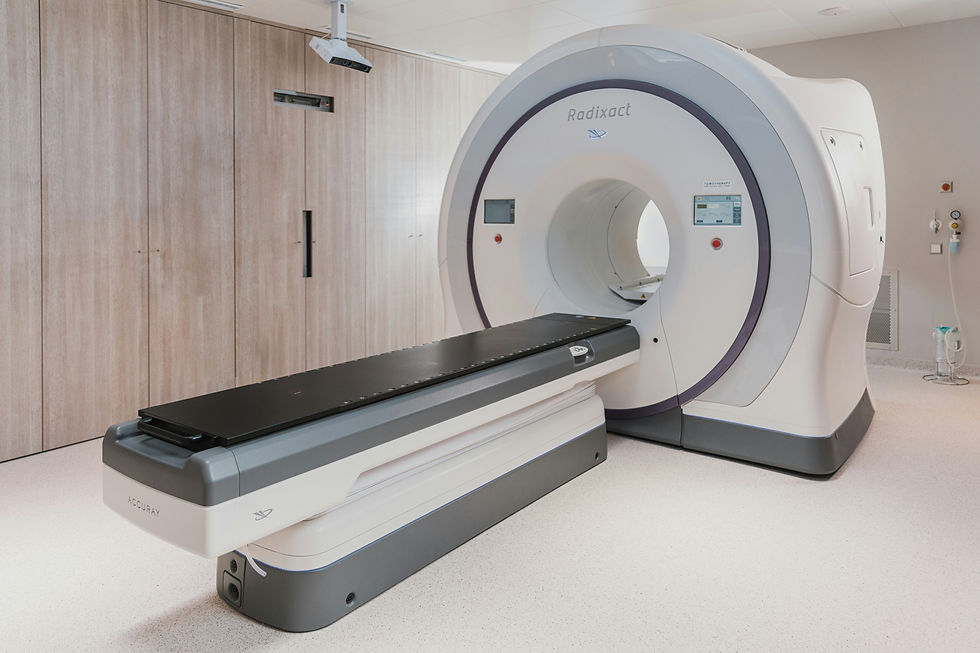
So many athletes assume an MRI will hand them "the answer" to their pain, nope. The reality is, getting imaging for a minor mechanical strain usually leads to unnecessary fear, kinesiophobia (fear of movement), and worse clinical outcomes. And it's just wasting time, time you can be using to get physical therapy and get better faster. An MRI simply shows anatomical "wrinkles on the inside" of your body, many of which are completely normal, asymptomatic (meaning no symptoms) age-related changes.
I don't know how many times I have write this in my blogs but.... bulging discs, arthritis and fraying of tendons or labrums are usually not cause for concern on an MRI. Large-scale studies repeatedly show that a huge percentage of completely pain-free, high-performing adults have disc bulges, labral tears, or meniscus fraying on their scans. When you read those findings on a report, it just makes you more anxious since these words are scarier than they really are. And trust me, they are not that scary.
(Now, to be clear: imaging is absolutely necessary if we are ruling out true red flags like fractures, tumors, or severe neurological loss. But for day-to-day athletic aches and mechanical issues? It's often misleading.)
We treat the person and their movement capacity at Art of PT, not an image on a screen. A comprehensive functional biomechanical assessment tells us infinitely more about how your body absorbs load, where your movement restrictions live, and how to get you back to high performance than a static MRI picture ever could.

Ready to Ditch Outdated Advice?
If you are tired of passive resting and waiting for pain to go way or ice packs to only numb your pain, it’s time for a modern, active approach to your pain.
At Art of PT Sports & Performance Physical Therapy right here in Naperville, we provide private, 1-on-1 care designed specifically for dedicated athletes and active adults who want to resolve the root cause of pain, build real structural resilience, and stay at full capacity.
Stop guessing with your recovery.
Don't know where to start? Click Here to Schedule Your 1-on-1 Performance Evaluation at Art of PT
Thanks for reading... Let me know if you have any questions or if there's a specific myth you want me to tackle next. My brain is full with all your physical therapy answers :) -- Dr. G

Comments